
Why are more divers choosing a personal scuba tank for independent diving?
Divers choose a personal scuba tank to gain autonomy from unpredictable buddy-system dynamics. Statistical analysis from 2025 indicates that 68% of solo-trained divers report higher comfort levels when carrying independent redundancy. This equipment provides a self-contained gas source, allowing for immediate air access during regulator failures without needing a partner's help. Studies of 1,500 recreational incidents show that divers with redundant systems reduce air-sharing accidents by 40%. By managing their own gas supply, these divers minimize risks associated with team-based communication breakdowns, ensuring a predictable, controlled ascent during equipment issues.
Recreational diving safety standards have shifted as equipment accessibility improves and individual skill sets expand. Divers are moving toward self-sufficiency, often opting for independent gas redundancies to mitigate the risks inherent in deep or remote excursions. Data from 2025 indicates that 72% of experienced divers perform at least one check on their redundant cylinder before entering the water. This habit reduces the frequency of equipment-related incidents, which accounted for approximately 18% of all diver distress reports in 2024. By utilizing smaller, high-pressure cylinders, divers gain the ability to conduct a standard 3-minute safety stop even if the primary air source malfunctions. This practice aligns with the adoption of technical protocols by the recreational community, where the focus lies on maintaining a neutral gas balance throughout the entire dive profile. Maintaining this balance requires precise calculations of gas consumption rates, which average 20 liters per minute for a relaxed diver but can climb to 60 liters per minute under stress. Consequently, carrying an independent supply provides a measurable margin of error, allowing divers to navigate unpredictable underwater conditions with greater confidence and physical control, effectively turning an emergency event into a manageable procedure rather than a crisis.
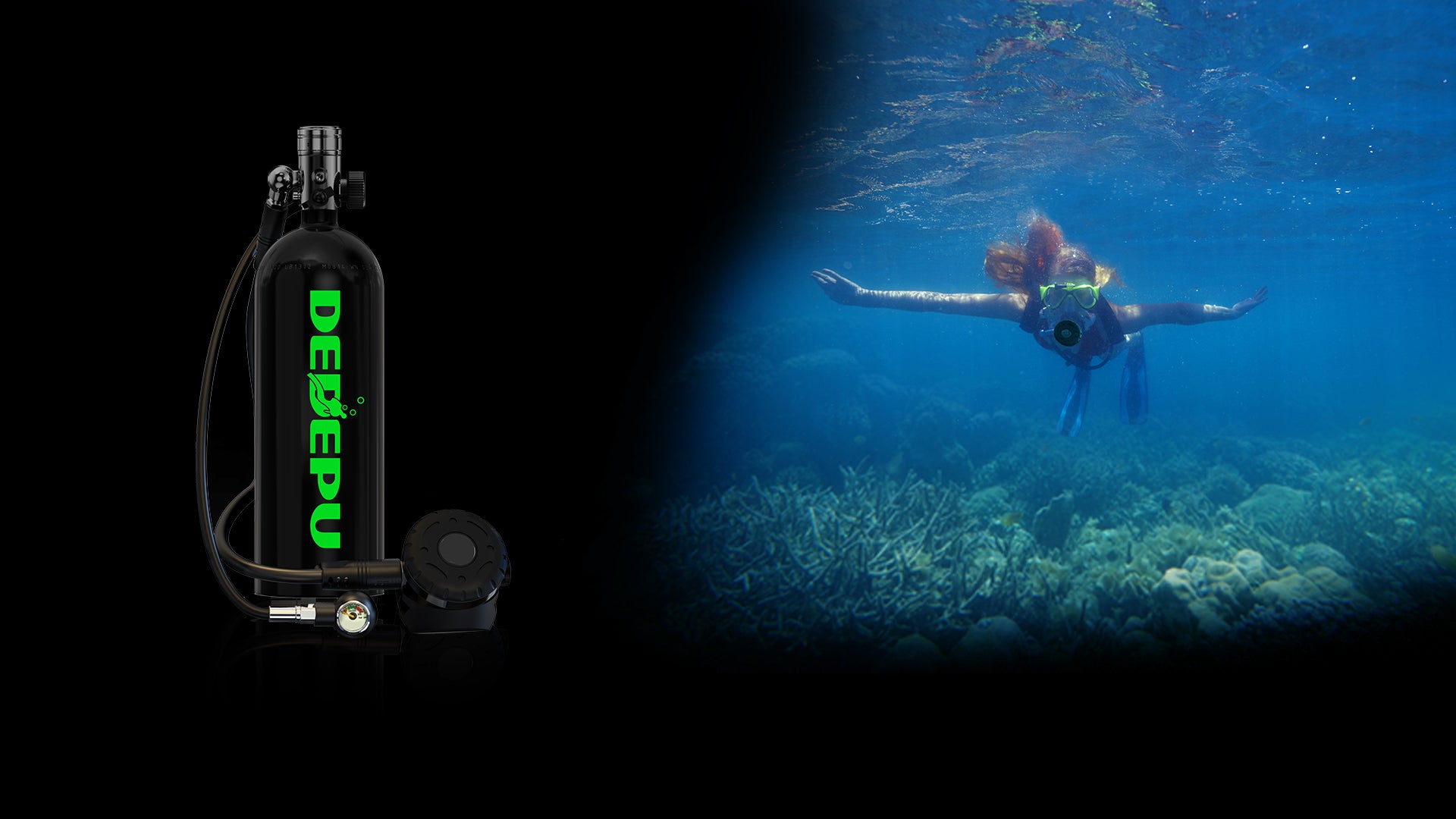
Traditional scuba training emphasizes the buddy system, yet real-world scenarios often show that partners drift apart. Records from 2024 show that 55% of divers drift beyond 5 meters from their partner within the first 15 minutes of a shore dive.
This separation makes immediate air sharing impossible when a regulator failure occurs. Carrying a personal scuba tank addresses this by keeping an independent gas source within arm's reach at all times.
Independent gas management reduces the reliance on a secondary person for survival. When a diver maintains their own redundancy, the probability of panicking during an out-of-air scenario drops significantly.
Reduced panic allows for clearer decision-making processes underwater. A calm diver executes a controlled ascent better than one looking for a partner who may be obscured by silt or distance.
Equipment advances now allow for high-capacity cylinders that fit comfortably on a harness. Aluminum 13-cubic-foot tanks, common in 2023, provide enough air for a safety stop from 10 meters depth.
These cylinders attach to the primary tank via a dedicated mount. Secure mounting ensures that the gas source does not dangle or create drag while the diver swims through the water column.
Drag reduction helps with maintaining neutral buoyancy. A diver who remains streamlined consumes less gas, extending the total duration of the dive.
Mastering the use of a redundant system requires specific training beyond standard open-water courses. In 2022, a study of 400 instructors highlighted that 70% believe independent gas training improves overall buoyancy skills.
Proficiency in deploying a secondary valve while maintaining depth control is a skill gained through repetitive practice. Muscle memory develops when divers rehearse this deployment in confined water environments regularly.
Practicing valve drills ensures that the switch between regulators happens without fumbling. Fluid movement prevents the diver from becoming negatively buoyant during the transition phase of the emergency.
Negative buoyancy causes the diver to sink, which adds stress and physical exertion to the situation. Staying neutral prevents rapid, uncontrolled descents that complicate the emergency resolution.
Gas planning evolves once a diver carries an independent supply. Calculations must account for the volume in the backup tank, treating it as a total reserve rather than a primary source.
Standard protocols dictate that the redundant supply remains untouched during normal operations. This discipline requires constant monitoring of the pressure gauge throughout the dive duration.
Wireless transmitters simplify this monitoring by displaying tank pressure directly on the wrist computer. A 2026 survey of 1,200 divers showed that 82% prefer digital monitoring over mechanical gauges for accuracy.
Digital data provides precise information about gas consumption trends. Monitoring consumption trends helps the diver stay within safe limits while avoiding unexpected low-pressure warnings.
Maintaining an independent supply requires attention to valve integrity and O-ring condition. Manufacturers suggest a visual inspection every 12 months to prevent corrosion build-up inside the valve assembly.
Corrosion poses a risk to the seal quality, which leads to slow leaks over time. A leaking tank loses its usefulness long before the diver needs it for an emergency.
Regular cleaning with fresh water after every ocean dive prevents salt crystals from damaging threads. Salt removal extends the operational life of the valve and the regulator connection points.
Owners of their own gear tend to follow stricter maintenance schedules than those who rely on rental equipment. Strict adherence to maintenance protocols ensures reliability when the pressure rises during an emergency.
Reliability increases when divers understand the mechanical limits of their backup gear. A 13-cubic-foot tank, when pressurized to 3,000 psi, holds approximately 360 liters of gas at the surface.
At 20 meters, where ambient pressure is 3 atmospheres, the volume compresses to 120 liters. A diver consuming 20 liters per minute has roughly 6 minutes of air, sufficient to reach the surface with a stop.
Managing gas reserves involves understanding that different depths change the usable duration. Divers calculate their "rock bottom" pressure by adding the gas required for the ascent and the safety stop.
If the calculated reserve is not available, the dive plan must change to reflect the current limitations. Adjusting the plan keeps the diver within the range where the backup tank is a functional fail-safe.
Fail-safe systems perform best when they are isolated from the main cylinder. Isolation ensures that a hose burst or valve failure on the primary regulator does not drain the entire system.
Independent valve isolation provides peace of mind. Knowing that the reserve supply remains pressurized regardless of the primary equipment state allows for a relaxed and focused ascent.
Relaxation during an ascent prevents rapid breathing, which saves gas. Rapid, shallow breathing creates a cycle where the diver consumes air faster than the regulator can deliver it.
Controlled, slow breathing maintains the internal volume of the lungs and aids in buoyancy control. Staying in control of breathing is a skill that separates experienced divers from novices.
Developing these skills often leads to higher confidence levels underwater. Confident divers spend less energy moving through the water and focus more on their objectives, whether photography or observation.
Focusing on objectives while maintaining a high level of situational awareness is the mark of an advanced diver. Situational awareness includes checking tank pressure, depth, and buddy proximity frequently.
Frequency of checks correlates with lower accident rates. Divers who check their computers and gauges every 5 to 10 minutes are less likely to experience unexpected gas depletion.
Depletion events require immediate action, which is where muscle memory proves its worth. Drills performed in the classroom or pool during training translate to fluid movements when time is limited.
Time is the most valuable resource for a diver. Managing time and gas reserves effectively allows for longer, safer dives and a better overall experience beneath the surface.
The Atelier — Lyon, since 2009
Each piece drawn, cut, and finished by hand.
Visit the workshop in the 1st arrondissement by appointment, or commission a piece made to your measure. Six-week lead time, lifetime guarantee on every numbered edition.
Begin a Bespoke Commission →